The Purpose of Pranayama
Pranayama—The Secret of Longevity
The simple meaning of pranayama is breath control. Breathing is life; it is the span between the first breath and the last. This means that each person is allotted a certain number of inhalations and exhalations, which is predetermined by fate, and a person is unable to extend their life even by a single breath, since it is measured by the number of inhalations and exhalations. That is why breath is so precious in life.
Those who want to live longer will use their breath sparingly. For example, running and other physical activities will quicken the breath. You’ll gain muscle and a toned physique, but you’ll lose your vital energy. In yoga practice, the breath is preserved. And at the same time, the body develops. That is why the practice of asanas is a higher form of practice compared to simple physical exercises, while pranayama immediately slows down the breathing cycle and increases inner strength.The more you practice, the more energy you’ll have to move forward on your life’s journey.
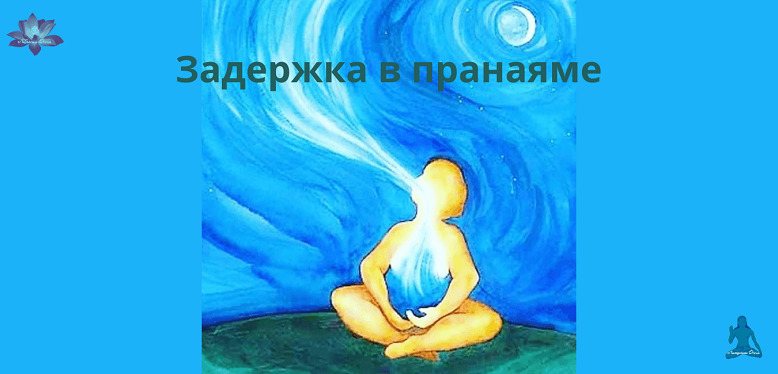
Pausing in Pranayama
Yogic texts state that pranayama consists of three components: inhalation, retention, and exhalation. There is a fourth aspect of pranayama in which there is neither inhalation nor exhalation—only retention remains. Retention is called kumbhaka in Sanskrit.
Kumbhaka also manifests in three forms. At the initial stage, it is impossible to remain solely in the retention phase, so all three components are important. As long as inhalations and exhalations continue to occur, this means that kumbhaka involves both inhalations and exhalations. This prefix “with” is called sahita in Sanskrit. Sahita kumbhaka is a breath retention that occurs alongside inhalations and exhalations.
All the pranayamas mentioned in yoga texts—sitali, sitkari, bhastrika, kapalabhati…—belong to the category of Sahita Kumbhaka Pranayama, which also involves inhalations and exhalations with breath retention. And one can then progress to a stage where inhalations and exhalations are absent entirely. Then there will be only retention; this is called “kevala” in Sanskrit. Kevala kumbhaka means “retention only.”
The sage Patanjali does not mention Kevala Kumbhaka; the term does not appear in his text. However, the sutras state that, in addition to these three components, there is a fourth stage of pranayama where there is neither inhalation nor exhalation. This is Kevala Kumbhaka—the highest stage of pranayama. And the goal of the practice is to attain this state of pranayama.
The Hatha Yoga Pradipika explains that one should practice Sahita Kumbhaka Pranayama—or pranayama with inhalation and exhalation—until one attains Kevala Kumbhaka. All of life lies between the first and last breaths. If you are able to fully manifest Kevala Kumbhaka, your life will become eternal. And this is the goal of ultimate yoga.
Pranayama—the driving force behind progress in yoga
Pranayama is no small matter. Until a yogi attains the ultimate divine body, pranayama continues to be a practice. In the Hatha Yoga Pradipika, a commentary on one of the verses explains that pranayama is an indispensable factor that propels the yogi from pranayama to pratyahara, from pratyahara to dharana, from dharana to dhyana, and from dhyana to samadhi. This entire progression is a manifestation of pranayama, or breath control. Therefore, the significance of pranayama cannot be underestimated.
When it comes to experience in the practice of yoga, this is why the Upanishads describe the entire path of yoga with the term pranopasana, or the worship of prana. Whoever knows prana—its source, its functions, and its power—will undoubtedly become immortal, which means they can conquer death.Immortality is when you conquer death and attaina divine body.And there is no other method that leads you to this goal without the help of pranayama.
If you want to master your breathing, sign up for the hands-on workshop “Pranayama—The Secret of Life”
We recommend reading


You might also like
Anuloma Viloma Pranayama
Yoga Warm-Up
One comment
Notice: